
Burkhard, W :: Suite op. 98
Burkhard, W
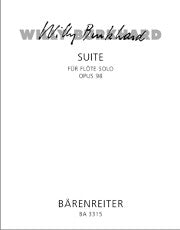
Barenreiter presents Willy Burkhard s Suite, op. 98, for flute alone.
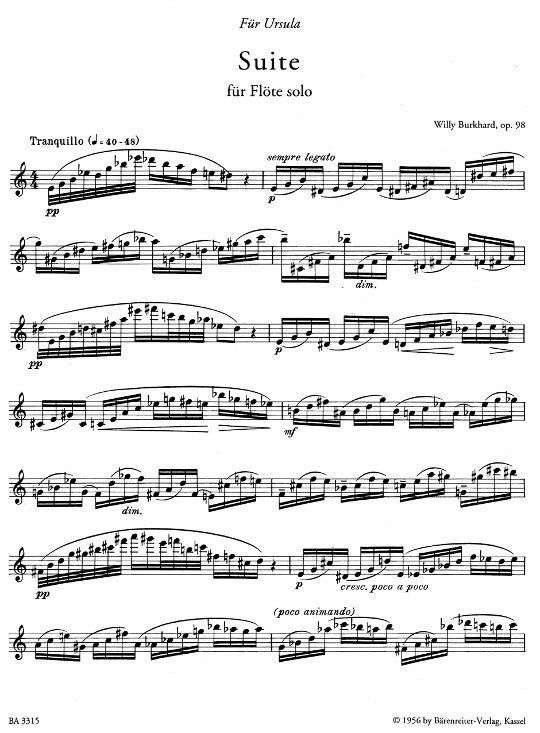
The Suite for Flute solo, Op. 98, was composed during the last year of Burkhard s life. This work, like the Serenade, Op. 92, is dedicated to the composer s daughter, Ursula. Burkhard was inspired by Bach s Sonata in E minor, BWV 1034, a work which his daughter had been practicing. It is understandable, then, that the Suite, Op. 98 features such Baroque compositional elements as compound melody and invertible counterpoint. Burkhard adds his own personality, however, to create a perfect balance of old and new.
The Suite, Op. 98 emphasizes pitch class E, with a particular focus on E minor. The first, third, and fourth movements highlight the tonic through repetition. The opening Tranquillo is unusual because Burkhard often moves from the tonic pitch class to the leading tone, creating an incomplete feeling. This descending half-step motion continues at the start of the second movement, however, the Dialog does not highlight any particular pitch class. Although this movement is particularly chromatic, each movement freely explores pitches throughout. Functional harmonic relationships are absent.
Despite the fact that this work is for solo flute, Burkhard creates different textures by implying more than one voice. His pitch and rhythm choices allow the music to sound as if there were two instruments playing. In both the Tranquillo and Dialog, the two voices are melodic equals. There is a particularly detailed exchange that takes place at the beginning of the second movement, where Burkhard attempts to imitate spoken dialogue. Each voice is given a distinct character and personality. During the A sections of the Lied, one voice is given a lyrical melody while the other supports with an arpeggiated background. In the central Allegro section of this movement, Burkhard creates the effect of a pedal tone through repetition while a second voice rapidly soars throughout the flute s range. The final movement, Allegro agitato, uses the technique of compound melody more sparingly, however, there are two contrasting motives that are repeated throughout.
- Kimberly Lynn Speiran; The Flute Music of Willy Burkhard (2011)
Eligible online purchases of $199 or more before tax receive free standard shipping within the U.S. Some exceptions apply.
Orders shipped outside the United States do not qualify for this offer.
We're always here for you. If you require product assistance or reccomendations, please open a chat at the bottom right of the page with a resident flutist. Alternatively, you can always contact us at
- Email: info@flute4u.com
- Phone: (972) 985-2662
We do not accept returns or exchanges for accessories like cases, bags, tone enhancers, or cleaning supplies. If an item is defective, you may exchange it for the same product within 10 days of purchase, as long as it's unused and in its original packaging.
Read more about our policies here.
Choose options