

Debussy, C :: Clair de Lune
Debussy, C
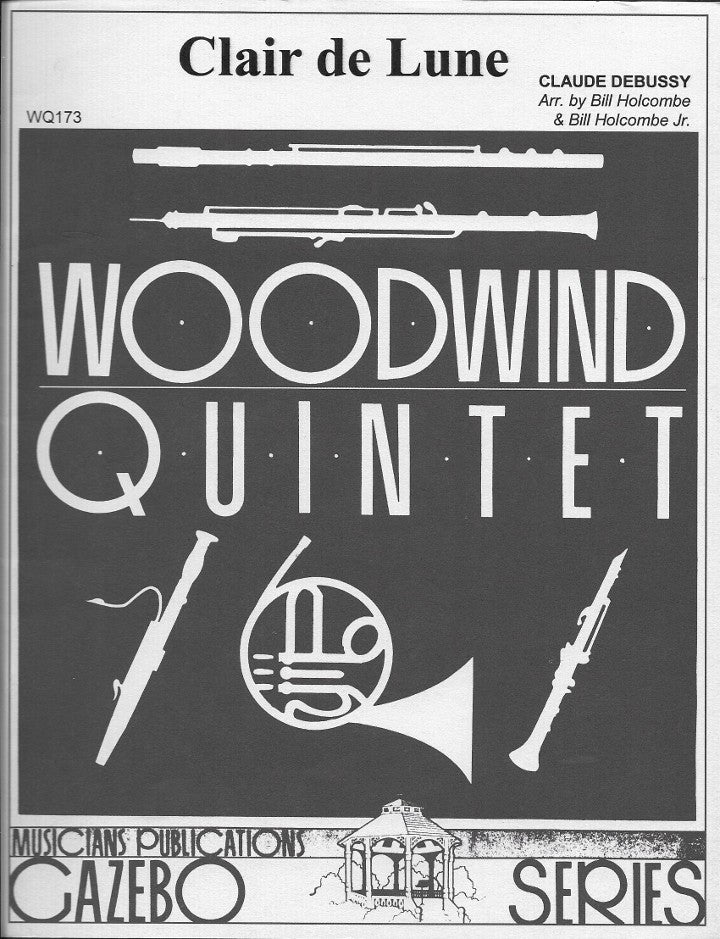
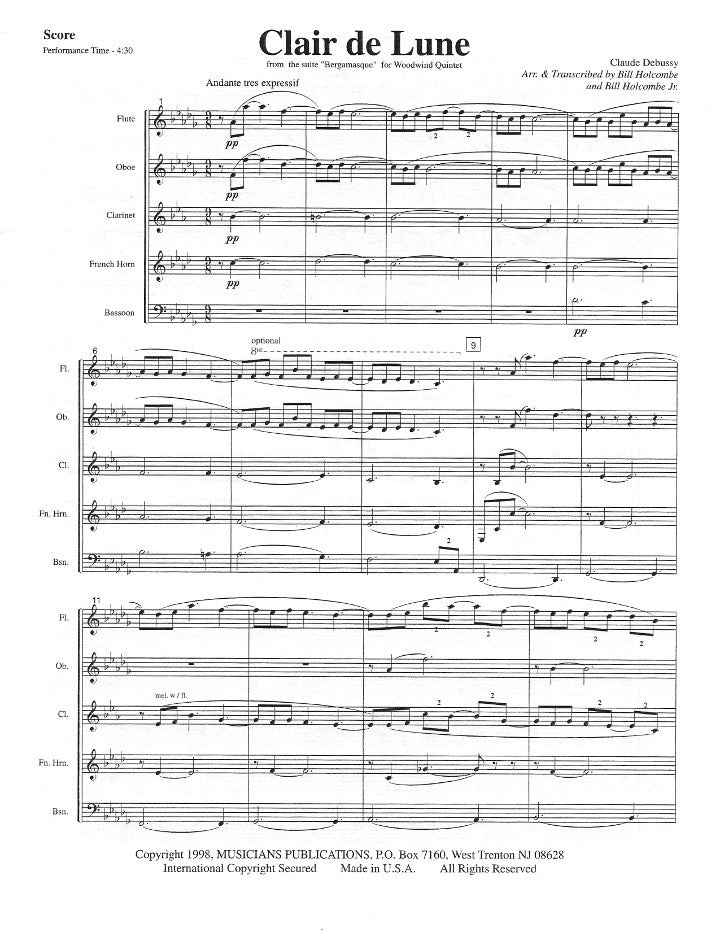
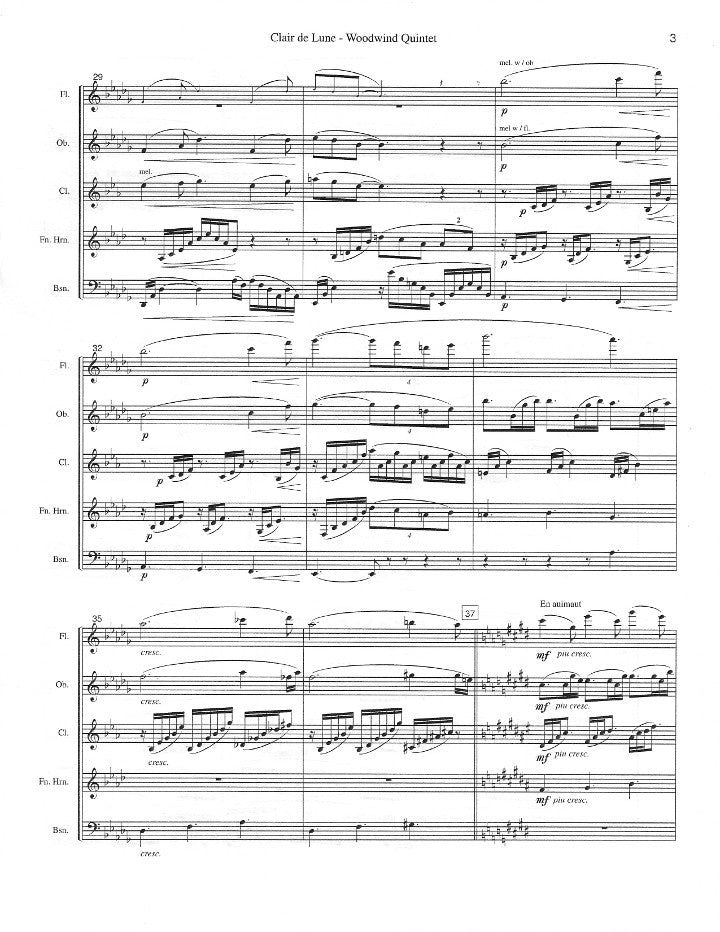
Musicians Publications presents Claude Debussy s Clair de Lune arranged for woodwind quintet by Bill Holcombe and Bill Holcombe Jr. Scored for flute, oboe, clarinet, French horn, and bassoon, this arrangement of Debussy s piano work is advanced in difficulty and 4:30 in duration.
Clair de lune (moonlight) was originally called Promenade sentimentale (sentimental walk), both from poems by Symbolist poet Paul Verlaine. It was renamed shortly before publication in 1905. Debussy had previously set Clair de lune for voice and piano twice, along with 18 other Verlaine poems. The poem describes charmante masques et bergamasques, inspiring the name of the suite. Bergamasques, masked festivals in the ancient Italian theater tradition, were a French tradition, full of archetypal peasant characters (Harlequin, Columbine and Scaramouche) from the town of Bergamo. The poem also refers to au calme clair de lune triste et beau (the still moonlight sad and lovely). The most elegant and mysterious of the suite s movements, Clair de lune became the most popular, eventually making it into films such as Giant (1956), Casino Royale (1967) and Ocean s Eleven (2001).
Clair de lune sweeps the audience away for a mere four luminous minutes. From the first flicker of moonlight, there s ambiguity. Debussy avoided traditional major and minor keys in his music, without fully eliminating traditional tonal centers. However, the tonality always feels uncertain. So while the piece opens in D-flat major, straying briefly into E major, the listener is left wondering. Debussy s instrumental texture, color, and suggestive harmonies all avoid traditional combinations, giving it an exotic quality. 'Clair de lune lacks a distinctive rhythm and breaks all kinds of harmonic rules in order to create a mood. It also lacks the grand crescendo. Although the music grows more agitated, with dissonant chords, it defies stereotypical structures. Returning to a variant of opening theme, Debussy changes it up, the harmony remaining fluid and ever-changing throughout. As the piece grows more technically demanding, it manages to retain a peaceful melancholy that grows sadder and more mysterious. It s as if there s a layer of gauze over the notes, making them less distinct, dreamier. It s all emotion there for individual interpretation. It s about the essence, not the details. Finally, at the end, there is a perfect cadence, harmony that Debussy used sparingly, providing a tonal anchor to announce his painting is complete. When the last note resounds, you re reminded of what Debussy wrote earlier that the primary aim of French music is to give pleasure. - Jayce Keane
Eligible online purchases of $199 or more before tax receive free standard shipping within the U.S. Some exceptions apply.
Orders shipped outside the United States do not qualify for this offer.
We're always here for you. If you require product assistance or reccomendations, please open a chat at the bottom right of the page with a resident flutist. Alternatively, you can always contact us at
- Email: info@flute4u.com
- Phone: (972) 985-2662
We do not accept returns or exchanges for accessories like cases, bags, tone enhancers, or cleaning supplies. If an item is defective, you may exchange it for the same product within 10 days of purchase, as long as it's unused and in its original packaging.
Read more about our policies here.
Choose options