

Puccini, G :: Vissi D'arte, Vissi D'amore
Puccini, G
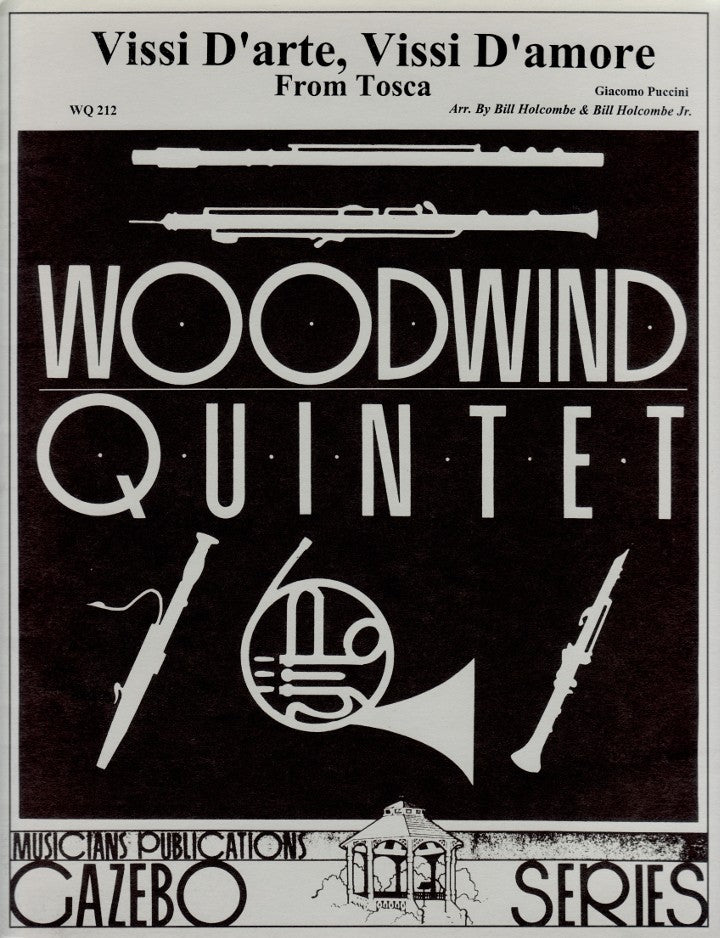
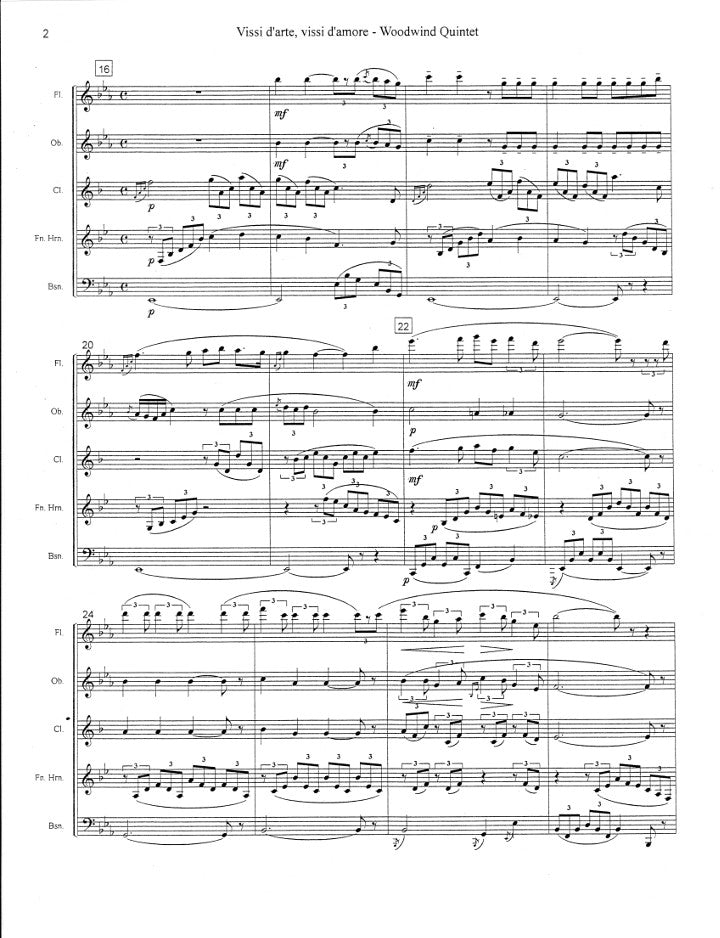
Musicians Publications presents Giacomo Puccini s Vissi D arte, Vissi D amore from Tosca arranged for woodwind quintet by Bill Holcombe and Bill Holcombe Jr.
Puccini's creative efforts were confined entirely to opera, and his productions enjoyed great popularity during the late nineteenth and early twentieth centuries. Even today, of all the operas being produced in professional opera houses, Puccini's are certainly among the most popular. His catalog includes Manon Lescaut (1893), La Boheme (1896), Tosca (1900), Madame Butterfly (1904), Turandot (1926), and the one-act opera Gianni Schicchi (1918).
Most of his operas reflect an important trend of his time known as verismo , or realism . The essence of this trend was the selection of subjects and stories from every-day life, rather than using historical or mythological themes. These real-life stories were then treated dramatically in a very believable and sometimes shockingly realistic fashion. Tosca is a prime example of verismo opera.
Tosca' is an opera in three acts, and was first produced at the Teatro Costanzi in Rome on January 14, 1900. In the opera, Floria Tosca, a beautiful singer, is the jealous lover of Mario Cavaradossi, a religious artist. Angelotti, an es-caped prisoner, hides in the church in which Mario is painting. Mario helps him escape. Scarpia, chief of Roman police, enters the church and, not finding Angelotti, arrests Mario as an accomplice, and orders him shot. Desiring Tosca for himself, Scarpia promises her lover's liberty in return for her favours. Tosca agrees and Scarpia orders a fake execution of Mario. When Scarpia returns to claim her she stabs him. At dawn the pretended execution of Mario takes place. Tosca hurries to the prone figure of her lover, after the firing, to find he is dead. Hearing noise of approaching soldiers, she realizes her murder of Scarpia has been discov-ered. Climbing the prison wall she leaps to her death.
In the famous aria, Vissi d arte,' Tosca asks God, in anguish, why, in spite of her life of prayer and sincere faith, she is faced with the choice of submitting to Scarpia's cruel demands or refusing him and seeing her lover, Mario, be executed. -James R.C. Adams
This woodwind quintet is advanced in difficulty with a duration of 2:40.
Eligible online purchases of $199 or more before tax receive free standard shipping within the U.S. Some exceptions apply.
Orders shipped outside the United States do not qualify for this offer.
We're always here for you. If you require product assistance or reccomendations, please open a chat at the bottom right of the page with a resident flutist. Alternatively, you can always contact us at
- Email: info@flute4u.com
- Phone: (972) 985-2662
We do not accept returns or exchanges for accessories like cases, bags, tone enhancers, or cleaning supplies. If an item is defective, you may exchange it for the same product within 10 days of purchase, as long as it's unused and in its original packaging.
Read more about our policies here.
Choose options