
Various :: 34 pieces pour flute seule: Flute Solos from the 18th Century
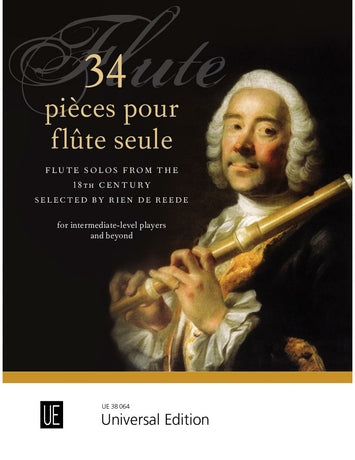
34 pieces pour flute seule: Flute Solos from the 18th Century
Various
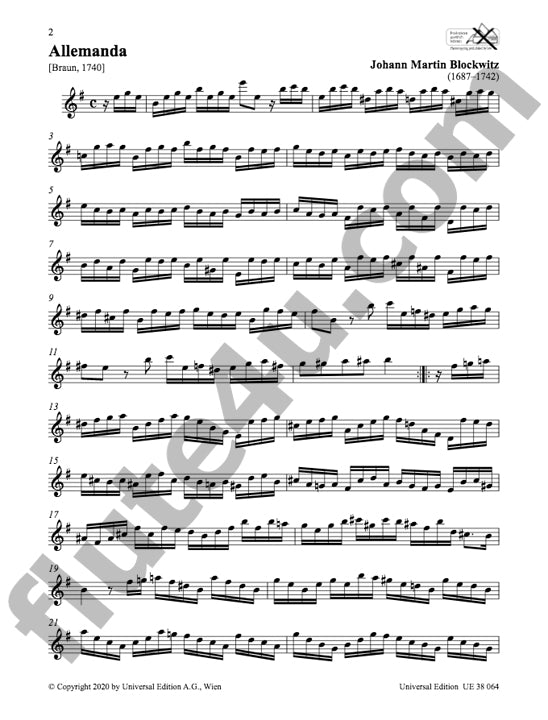
In the first half of the eighteenth century, in addition to multi-movement works for solo flute (J. Hotteterre, J.B. de Boismortier, G. Ph. Telemann, J.S. Bach, C. Ph. E. Bach etc.), there were also dozen of small pieces for solo flute. Hotteterre's Echos (1708) and Couperin's Le Rossignol en amour (1713) are prime examples. From around the middle of the century, Jean Daniel Braun (1740), Michel Blavet (ca. 1752), Evrard Taillart (1755 and 1757), Antoine Mahaut (1757), Filippo Ruge, and Wenceslao Zimmermann followed with collections of solo pieces for flute or collections with 'petits airs, brunettes, menuets, etc' for two flutes or flute and basso continuo, in which solo pieces were sometimes hidden away. Works with titles such as Caprice, Fantaisie, Courante, Bohemienne, or Gigue Saxonne may be technically challenging but are wonderful music. In Quantz's 'Caprices', solos can be found that also appear in Braun and Taillart's collections. Composers' names are absent from all the collections. In his Solfeggi, Quantz added the name of Johann Martin Blockwitz to a passage that appears in an 'Allemande' (No. 1 in the present collection). That the other pieces in Quantz's Caprices are also the work of Blockwitz (or Braun), as Horst Augsbach suggested, is however speculation.
As Quantz wrote in his autobiography, there was hardly any literature for flute in existence around 1719. As a result, music for oboe or violin had to be arranged for flute. As late as 1735, Michel Corrette included instructions for adapting violin music for flute in his Methode. Many of the pieces in the present collection are undoubtedly inspired by works for strings, but a lute piece by Silvius Leopold Weiss may, as discovered by Barthold Kuijken, also have served as a source. Broken chords, harmonic games, large leaps, attempts to suggest multiple voices and the imitation of Italian virtuosity characterize almost all of the works presented here. Particularly for the French flute literature that was long dominated by melancholic airs tendres, this new style inspired by Michel Blavet, was a revolution.
Contents
- Allemanda — Blockwitz, J.M.
- Capriccio — Braun, J.D.
- Bizzarria/Courante — Weiss, S.L.
- Invenzione — Braun, J.D.
- Rondeau — Braun, J.D.
- Minuetto — Braun, J.D.
- Lamentevole — Braun, J.D.
- Giga — Braun, J.D.
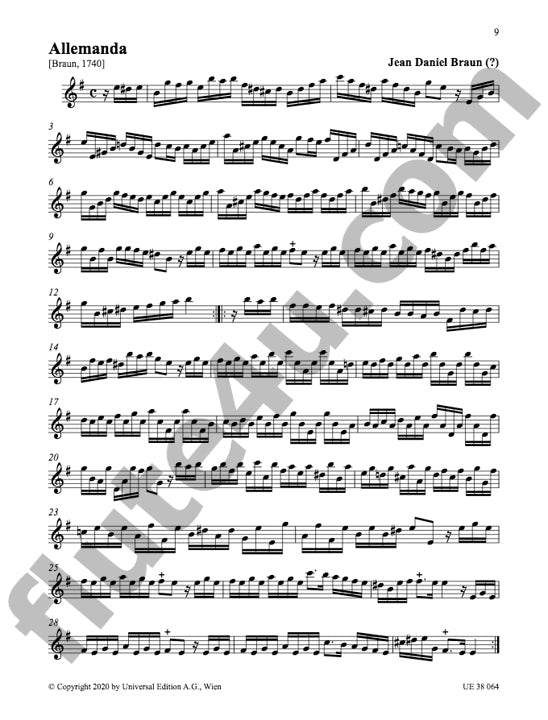
- Allemanda — Braun, J.D.
- Minuetto 1 - Minuetto 2 - Double — Braun, J.D.
- Rondeau — Braun, J.D.
- Fantasia — Blockwitz, J.M.
- Rondeau — Blavet, M
- Bizzarria — Braun, J.D.
- Giga — Braun, J.D.
- Air — Braun, J.D.
- Gigue — Mahaut, A
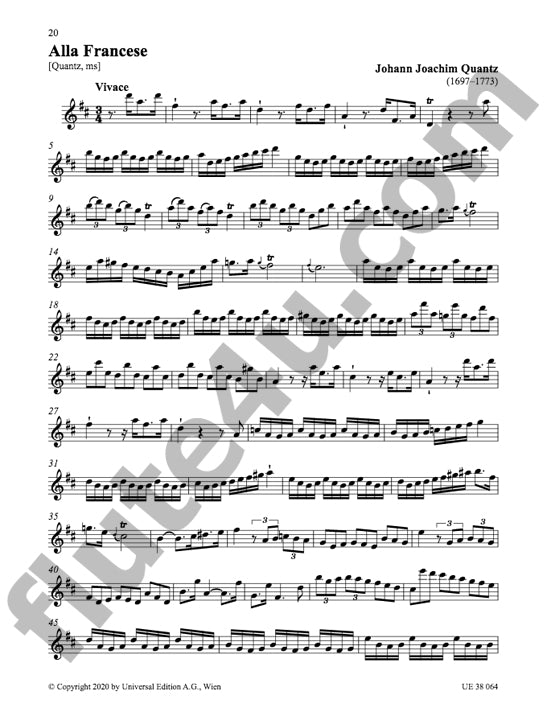
- Alla Francese — Quantz, J.J.
- Giga — Anonymous
- Fantasia — Quantz, J.J.
- Giga — Anonymous
- Allegro — Anonymous
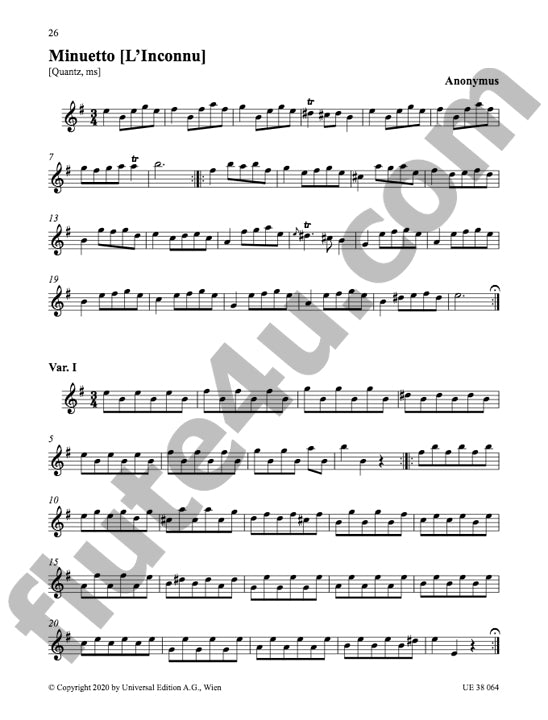
- Minuetto [L’Inconnu] — Anonymous
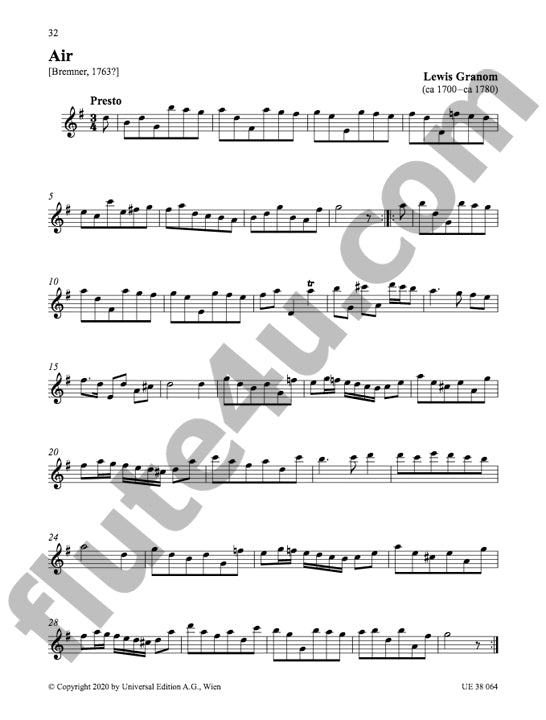
- Air — Granom, L
- Jigg — Granom, L
- Capriccio — Ruge, F
- Gigue Saxonne — Anonymous
- 1er Menuet - 2e Menuet — Taillart, P.E.
- Bohémienne — Taillart, P.E.
- Caprice — Taillant, P.E.
- 1er Menuet - 2e Menuet — Mahaut, A
- Menuet — Mahaut, A
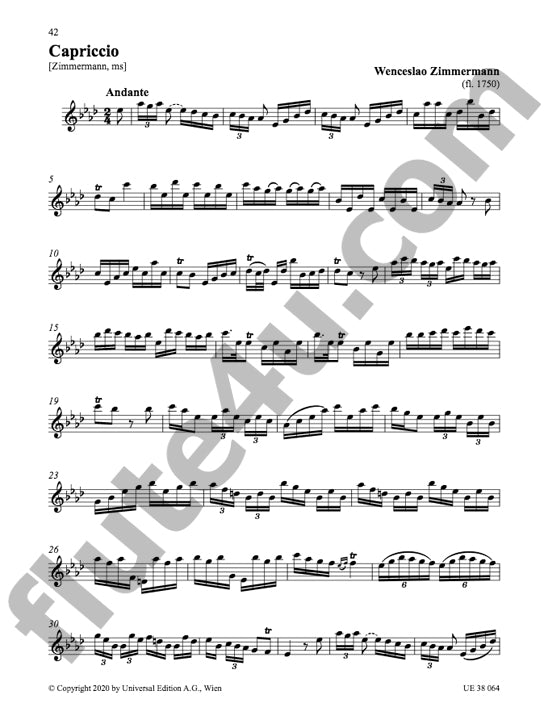
- Capriccio — Zimmermann, W
- Capriccio — Zimmermann, W
Eligible online purchases of $199 or more before tax receive free standard shipping within the U.S. Some exceptions apply.
Orders shipped outside the United States do not qualify for this offer.
We're always here for you. If you require product assistance or reccomendations, please open a chat at the bottom right of the page with a resident flutist. Alternatively, you can always contact us at
- Email: info@flute4u.com
- Phone: (972) 985-2662
We do not accept returns or exchanges for accessories like cases, bags, tone enhancers, or cleaning supplies. If an item is defective, you may exchange it for the same product within 10 days of purchase, as long as it's unused and in its original packaging.
Read more about our policies here.
Choose options